
Where Are Sarees Made in India? Cities, Craft, and the Chaos Behind It
When you buy a saree, what you see is the final product.
What you don’t see is the complex, fragmented ecosystem behind it — spread across cities, villages, weavers, traders, and brands.
India doesn’t have one “saree manufacturing hub.”
It has dozens of clusters, each specializing in different fabrics, techniques, and price segments.
This guide breaks it down clearly.
- Saree Manufacturing in India Is Decentralized
Unlike modern apparel factories, sarees are not mass-produced in one place.
They are made across:
- Small weaving towns
- Artisan clusters
- Powerloom hubs
- Handloom villages
India’s textile industry is largely unorganized and decentralized, with many small-scale producers and artisans involved.
- Huge variety
- Inconsistent quality
- Wide price differences
- The Major Saree Manufacturing Cities
Let’s break down the most important regions.
🧵 Banaras (Varanasi) — Silk & Banarasi Sarees
Banaras is one of the oldest saree-producing centers.
Known for:
- Banarasi silk sarees
- Heavy zari work
- Bridal and occasion wear
Banarasi sarees are traditionally handwoven and often used for weddings due to their richness.
- High craftsmanship
- Also heavily copied by powerlooms
🧵 Kanchipuram — Kanjeevaram Silk
Located in Tamil Nadu, Kanchipuram is famous for:
- Thick silk sarees
- Bold borders
- Durable weave
Kanjeevaram sarees are known for their heavy silk and contrasting borders, making them a staple for traditional weddings.
🧵 Surat — The Mass Manufacturing Hub
Surat is not traditional — it’s industrial.
Known for:
- Synthetic sarees
- Net, georgette, chiffon
- Machine embroidery
Surat is one of India’s largest textile hubs, producing a significant portion of synthetic fabrics and garments.
- Fast production
- Affordable pricing
- Huge volume
🧵 Kolkata (West Bengal) — Cotton & Artistic Weaves
Kolkata and nearby regions produce:
- Tant sarees
- Jamdani sarees
- Lightweight cotton weaves
These sarees are known for:
- Breathability
- Fine craftsmanship
🧵 Gujarat — Bandhani & Patola
Gujarat is known for:
- Bandhani (tie-dye sarees)
- Patola (double ikat weaving)
Patola sarees are highly intricate and can take months to weave.
🧵 Mysore & Karnataka — Silk Sarees
Known for:
- Mysore silk
- Lightweight silk sarees
These are:
- Simpler than Kanjeevaram
- Easier to wear

- Handloom vs Powerloom (The Big Divide)
This is where things get complicated.
Handloom sarees:
- Made by artisans
- Slower production
- Higher craftsmanship
- More expensive
Powerloom sarees:
- Machine-made
- Faster production
- Lower cost
- Consistent patterns
India has millions of handloom weavers, but powerlooms dominate large-scale production.
- Many sarees look similar
- But quality and price differ significantly
- Where Do Brands Fit In?
Most saree brands:
- Don’t manufacture themselves
- Source from:
- Weavers
- Traders
- Manufacturers
They focus on:
- Curation
- Branding
- Retail experience
- Same saree can be sold at different prices
- Branding affects perception heavily
- The Supply Chain (Why It Feels Chaotic)
A typical saree journey looks like this:
- Yarn supplier
- Weaver / manufacturer
- Middleman / trader
- Wholesaler
- Brand / retailer
Each layer adds:
- Cost
- Variation
- Complexity
- Pricing feels inconsistent
- Quality varies even within the same category
- Why There Is So Much Price Variation
You’ll often see:
- ₹3,000 saree
- ₹15,000 saree
- ₹50,000 saree
All looking somewhat similar.
That’s because price depends on:
- Fabric quality
- Handwork vs machine work
- Weaving technique
- Brand markup
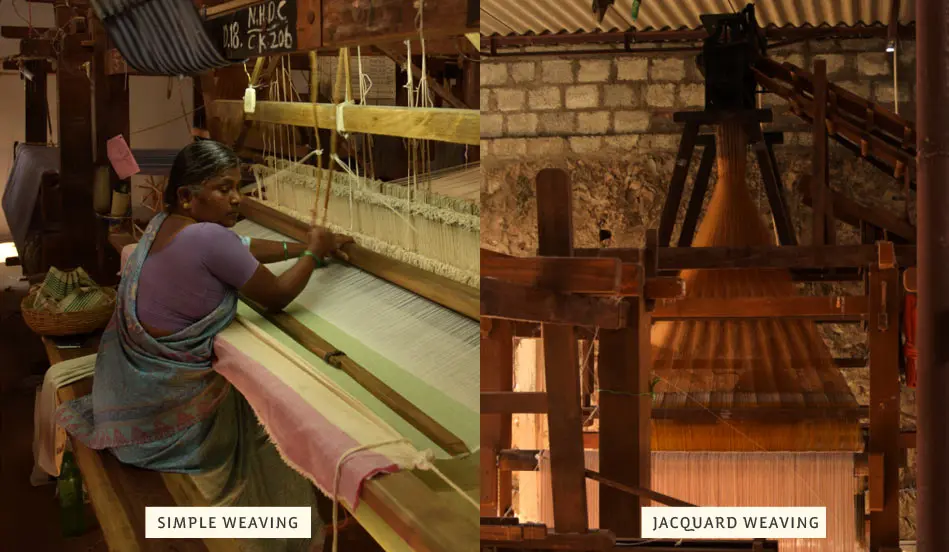
- The Reality: Craft vs Commercialization
India’s saree industry sits between two extremes:
Craft side:
- Skilled artisans
- Time-intensive weaving
- Cultural heritage
Commercial side:
- Mass production
- Fast fashion
- Lower costs
Both coexist — and often overlap.
- What This Means for You as a Buyer
Understanding where sarees come from helps you:
- Identify genuine craftsmanship
- Understand pricing differences
- Make informed decisions
Practical takeaway:
- Don’t judge only by appearance
- Ask about fabric and origin
- Look closely at weave and finishing
Final Thought
Sarees in India are not made in one place —
they are made across a vast, complex network of cities, artisans, and industries.
That’s what makes them:
- Diverse
- Unpredictable
- And deeply rooted in craftsmanship
Behind every saree is not just fabric —
but a system of people, processes, and history working together.
